About
One brand, one kind of machine, one metro
Sub-Zero Pro Repair Denver is an independent shop. We are not the factory and we do not pretend to be — we simply spend every working day inside built-in Sub-Zero refrigeration in Denver.

Why the scope is this narrow
A generalist who fixes a dishwasher in the morning and a dryer at lunchtime arrives at a dual-compressor built-in without a mental model of it. Sub-Zero refrigeration runs two independent circuits, its own defrost logic, its own sensor set and a control architecture that changed several times across the 500, 600 and 700 families. Knowing which board revision is in front of you decides whether a fault takes twenty minutes or a return trip.
So the van carries what actually fails on these cabinets: evaporator fan motors, defrost heaters and thermostats, thermistors, door gaskets, water inlet valves, drain heaters, condenser fan motors and the control boards for the widespread model families. Sealed-system parts are ordered to the specific model, because guessing at those is how a repair becomes a replacement.
What Denver does to these machines
Three things, and they turn up over and over. Dry mile-high air pulls humidity out of a wine cabinet, so a humidity control that has quietly failed shows up as dried corks long before the temperature readout looks wrong. Hard water scales ice moulds and chokes fill valves, which reads as a dead ice module when it is usually a descale and a valve. And a ninety-degree stretch on top of a condenser blanketed in cottonwood, pet hair or dust off a scrape next door will run a compressor for hours and convince an owner the sealed system is finished.
Add the outages — a hailstorm that drops power twice in an evening leaves boards in odd states — and most of what looks terminal in this city is a coil, a fan, a sensor or a seal.
How a call is run
- You describe the symptom. That alone narrows most Sub-Zero faults to one circuit, so you hear what it probably is before anyone drives out.
- The cabinet gets metered, not guessed at. Readings first, opinion second.
- You get the fault, the part and the price before anything is opened up. $89 buys a full diagnosis rather than a look, and it is deducted from the price of the repair the moment you give the go-ahead. The bands a repair usually falls between are printed on each service page.
- Panel-ready and integrated units come out on sliders and go back the way they were found. Trim panels off, trim panels on, floor unmarked.
What we will tell you not to do
If a cabinet is genuinely at the end of its life we will say so rather than sell you a sealed-system repair that costs more than the machine is worth. And if the fix is a filter, a defrost cycle or moving a toe kick that is strangling the return air, that is what you will be told — on the phone, before there is a visit to bill. The arithmetic behind that call is written out in the repair-or-replace pages, scenario by scenario, and the readings it rests on are in the code and display reference.
Describe the symptom and we will tell you what it usually is
Describe the symptom on the phone and you will usually hear what it probably is before anyone drives out. A $89 service call covers the visit and the full diagnosis in Denver, and comes off the repair once you approve it.
-
Read before quoted
Stored codes first, then air and coil temperatures, then amp draw at start-up, then pressures only if everything in front of them has been ruled out. The readings decide the quote, not the other way round.
-
Refrigeration only
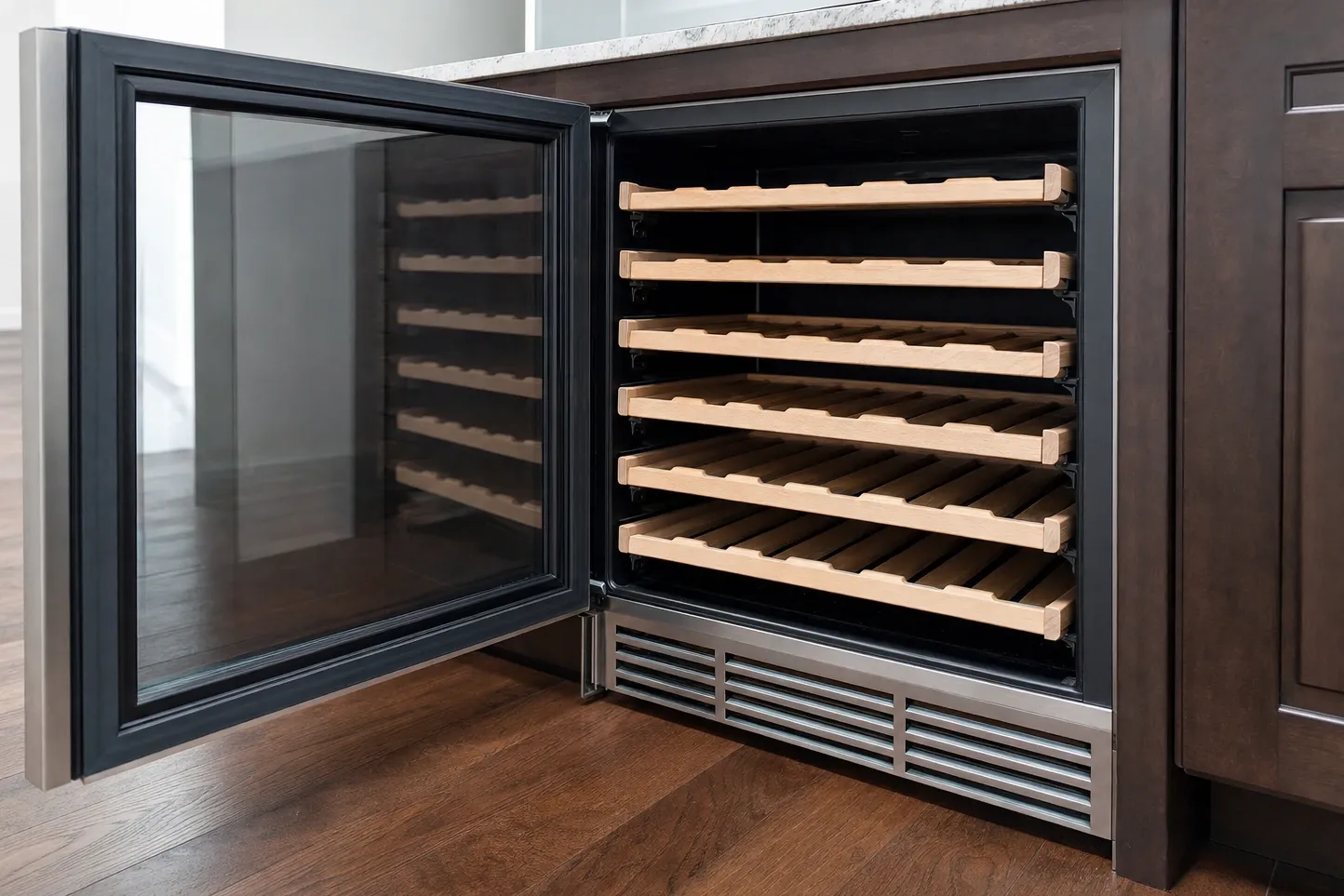
Built-ins, panel-ready columns, undercounter units, ice makers and wine cabinets. No ranges, no dishwashers, no split attention.
-
We will say do not
A sealed-system repair runs $1,480–$3,420. On some cabinets that is money well spent and on some it is not, and you get told which before anything is opened up.
-
Reachable hours
Technicians are out 8:00 am – 8:00 pm, seven days. Someone picks up at any hour, so a failure overnight does not have to wait for an office to open before it is on the list.